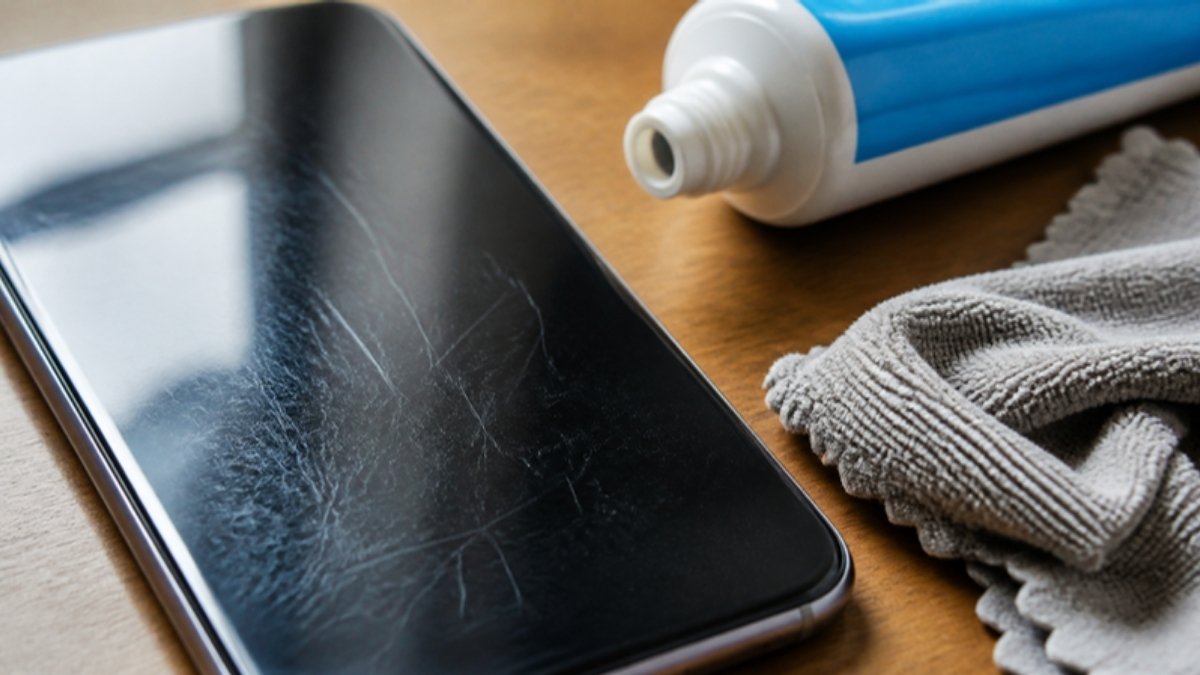
Videos online promise that toothpaste or baking soda will make screen scratches vanish. Before you try, here is what really happens.
Myth: Toothpaste removes scratches
Reality: Toothpaste is mildly abrasive. It may make very light marks on a plastic protector less visible, but it cannot repair glass. It can also strip the oil-repellent coating, making the screen smudge more, and paste can get into speakers and ports.
Myth: Baking soda paste works
Reality: Same problem, but more abrasive. You risk creating many fine scratches over the whole screen.
Myth: Sandpaper or polishing compounds
Reality: Professional glass polishing exists, but at home it often makes things worse, creates a wavy screen or damages the display.
Myth: Vegetable oil or car scratch remover
Reality: Oil only fills scratches temporarily. Car products contain chemicals not designed for phone screens.
What actually works
- Check if the scratch is on the protector. Peel it off; your screen may be perfect underneath.
- Cover light scratches with a new tempered glass protector. A good protector hides many small scratches.
- Deep scratches you can feel with a fingernail cannot be removed. If they affect visibility or touch, a screen replacement is the real fix.
Choose the right protector with our guide on tempered glass vs hydrogel, and see screen repair costs if you need a new screen.
Prevent scratches
- Do not keep your phone in the same pocket as keys or coins.
- Use a case with a raised edge.
- Fit a protector on day one.
Fresh, scratch-free phones from Simcel
- Samsung Galaxy A17 5G: Super AMOLED display.
- Tecno Spark 50C: tough, water-resistant build.
- Infinix Smart 20 (4GB RAM + 128GB): affordable everyday phone.


Leave a Reply