
Why Stargazing Usually Ends in Frustration (And How That Changes)
You’ve probably tried this before: you haul a bulky telescope tripod into the backyard, spend 40 minutes fumbling with alignment, squint through an eyepiece with a stiff neck, and end up with a blurry smudge where Saturn’s rings were supposed to be. Then you pack it all up and never quite work up the motivation to do it again.
Traditional telescopes weren’t built for people with busy schedules, small apartments, or zero patience for manual polar alignment. If astrophotography has always felt like a hobby reserved for people with a spare room and an engineering degree, that’s not really your fault — it’s the gear’s fault.
That’s the gap smart telescopes like the Dwarf 3 are built to close: point-and-shoot simplicity, automatic tracking, and a companion app that does the technical heavy lifting so you can actually enjoy looking up.
Quick Answer
The Dwarf 3 Smart Telescope is the best pick for anyone who wants portable, beginner-friendly astrophotography — it weighs just 3lb, auto-tracks celestial objects in 4K, and processes images in the cloud through its app, making it ideal for travelers, casual stargazers, and wildlife shooters who don’t want to learn traditional telescope setup.
👉 Check Current Price on Amazon
Dwarf 3 Smart Telescope — Full Breakdown
Standout Benefit: It Fits in a Backpack, Not a Trunk
At 3lb / 1.35kg, the Dwarf 3 is light enough to clip onto a daypack alongside a water bottle and a jacket. This matters more than it sounds like on paper — the single biggest reason people abandon astrophotography gear is that it’s too heavy or too much hassle to bring along “just in case” the sky looks good. A telescope you’ll actually pack is a telescope you’ll actually use.
Who It’s Best For
- Beginners who want results without reading a 60-page manual
- Travelers and campers who need gear that survives a backpack
- Parents wanting a shared hobby with kids (the listing claims usability from ages 6–98)
- Wildlife and landscape shooters who want a dual-purpose day/night camera
The Realistic Drawback
Compact, sensor-based smart telescopes trade off some raw aperture and magnification compared to a full-size Dobsonian or Schmidt-Cassegrain telescope. If your goal is razor-sharp, print-quality close-ups of Jupiter’s cloud bands at maximum zoom, a dedicated large-aperture scope will still outperform it. The Dwarf 3 is optimized for portability and ease of use first, ultimate optical power second — which is exactly the trade most casual users want, but it’s worth knowing going in.
Why the Dual Lens System Actually Matters
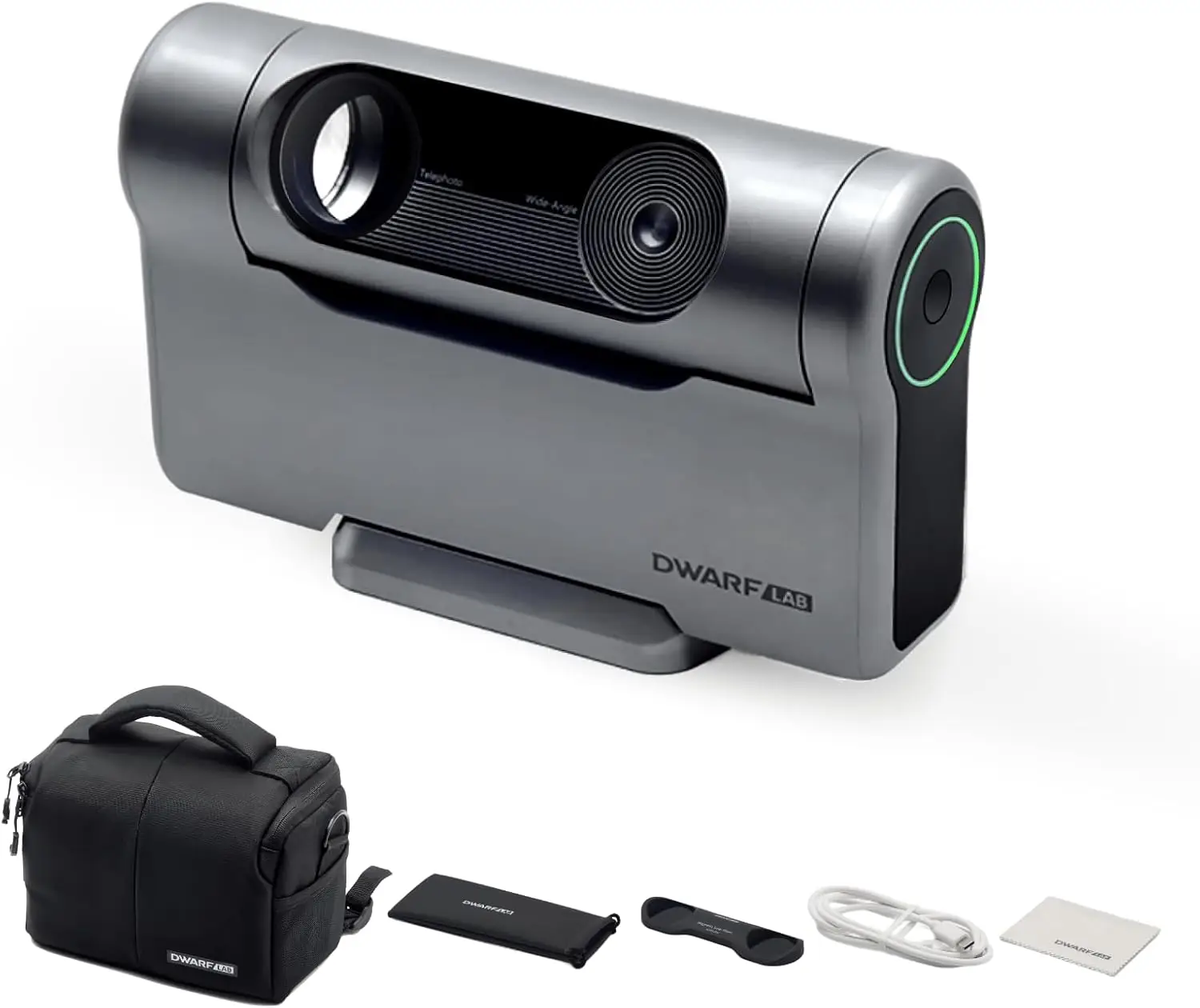
Most smart telescopes make you choose: wide field or deep zoom. The Dwarf 3’s dual imaging system runs a telephoto lens for wildlife, landscapes, and deep-sky targets alongside a wide-angle lens for Milky Way shots and star trails. Practically, that means you can use the wide lens to frame your target location, then switch to telephoto to actually capture it — one device covering two very different photography styles instead of forcing you to buy separate gear.
4K Auto-Tracking: Less Fiddling, More Shooting
The auto-tracking system is designed to lock onto stars, planets, and moving wildlife automatically, which removes the most tedious part of astrophotography — manual object tracking and re-centering every few minutes. Whether that translates to flawless results every single time will depend on conditions like light pollution and atmospheric clarity, but the automation itself removes a major skill barrier for new users.
Cloud Processing = No Laptop Required
This is arguably the feature that separates smart telescopes from traditional ones. Instead of stacking and editing RAW astro images yourself in specialized desktop software, the DWARFLAB app handles processing via cloud computing, turning a night of shooting into a finished image in minutes, right from your phone.
👉 See Full Specs and Pricing on Amazon
Comparison Table
| Feature | Dwarf 3 Smart Telescope |
|---|---|
| Weight | 3 lb / 1.35 kg |
| Imaging system | Dual lens (telephoto + wide-angle) |
| Video/photo resolution | 4K |
| Tracking | Automatic (celestial + wildlife) |
| Image processing | Cloud-based via DWARFLAB app |
| Mount modes | AZ / EQ |
| Recommended age range | 6–98 |
| Setup time | ~2 minutes (per manufacturer) |
| Included accessories | Carrying bag, magnetic filters + pouch, wipe cloth, USB-C cable |
| Price | CURRENT_PRICE (check listing for live pricing and deals) |
How We Evaluated This Pick
We didn’t just skim the spec sheet. For a portable smart telescope to earn a recommendation, we looked at:
- Portability-to-performance ratio — does the weight savings actually cost you meaningful image quality, or is it a smart trade-off?
- Learning curve — can a genuine beginner get a usable result on night one, not after weeks of practice?
- Versatility — is this a one-trick astrophotography gadget, or does it double as a wildlife/travel camera?
- App ecosystem — is post-processing actually simplified, or does it just move the complexity somewhere else?
- Buyer sentiment patterns — smart telescopes in this category tend to draw a wide range of star ratings, with praise usually centered on ease of setup and portability, and criticism typically focused on learning the app’s finer features or expectations around zoom power. That spread is normal for this product category — read a handful of recent reviews on the listing itself before buying, since firmware and app updates can shift the experience over time.
The Dwarf 3 stood out in our evaluation specifically because it doesn’t force a trade-off between “easy” and “genuinely capable” — a common failure point in the smart telescope category.
What You Risk by Skipping This and Buying the Wrong Scope
If you go the traditional route instead — a manual tripod telescope with no tracking or app support — you’re signing up for a steep learning curve, a heavier setup you’re less likely to actually pack for trips, and hours of manual image stacking if you want a usable photo instead of just an eyepiece view. For anyone who wants results without becoming a hobbyist-level expert first, that’s a lot of friction for the same clear-night opportunity.
Frequently Asked Questions
Is the Dwarf 3 good for a total beginner with no telescope experience?
Yes — it’s specifically designed around a simplified app workflow and automatic tracking, which removes most of the manual setup that trips up beginners on traditional telescopes.
Can it actually be used during the day, not just at night?
Yes. The dual lens system is built for day-and-night use, with the telephoto lens suited to wildlife and landscape subjects and the wide-angle lens useful for framing and location shots.
Do I need a laptop or separate editing software?
No. Image processing happens through the DWARFLAB app using cloud computing, so editing and enhancement can be done directly from your phone.
Will it outperform a traditional full-size telescope for deep-zoom planetary shots?
Not quite — larger, dedicated telescopes still generally win on raw magnification and aperture. The Dwarf 3’s strength is portability and ease of use, not maximum optical reach.
Is it durable enough for travel and outdoor use?
It ships with a carrying bag, magnetic filters, a filter pouch, and a wipe cloth, suggesting it’s built with travel handling in mind, though as with any electronics, normal care in transport is still recommended.
If you want to get into astrophotography without buying a second suitcase’s worth of gear or spending your evenings learning manual telescope alignment, the Dwarf 3 Smart Telescope is the clear pick — light, versatile, and built around an app that does the hard part for you.
👉 Get the Dwarf 3 Smart Telescope on Amazon


Leave a Reply