
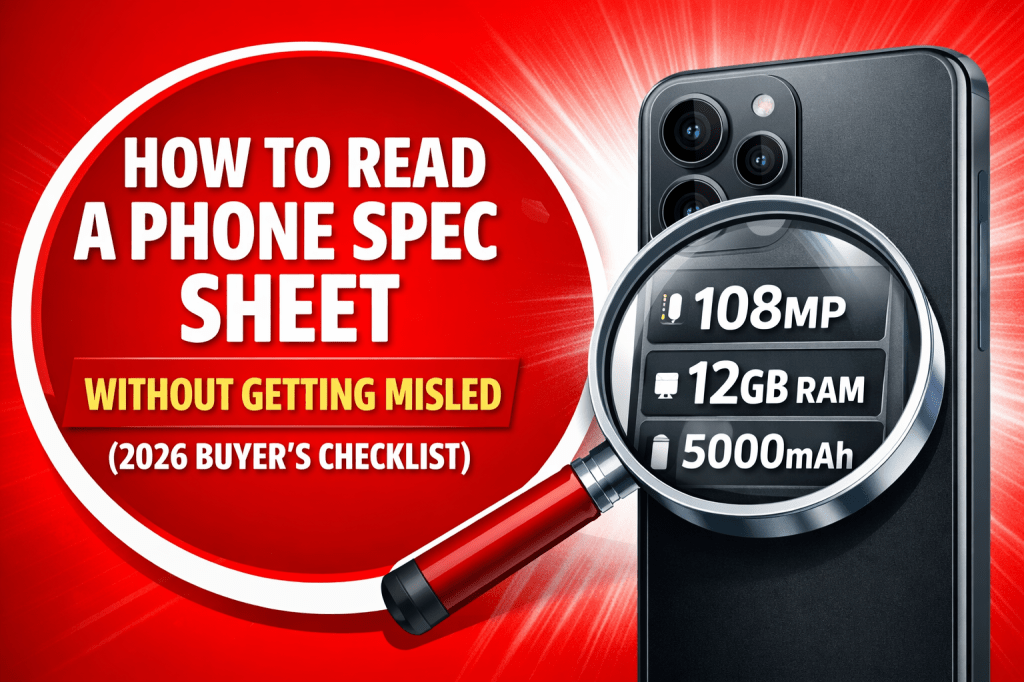
In 2026, smartphone brands don’t just sell phones — they sell numbers.
108MP camera.
120Hz display.
8GB RAM.
5000mAh battery.
Sounds impressive.
But here’s the truth: big numbers don’t always mean better performance.
If you’re buying phones for yourself, reselling under Simcel Ventures, or recommending devices to customers, you must learn how to read a spec sheet like a pro — not like a confused buyer.
Let’s break it down the smart way.
1. Processor (Chipset) – The Real Brain of the Phone
This is the most important spec on the sheet.
Ignore it, and you’ll regret it.
What to Check:
- Chip name (Snapdragon? MediaTek? Exynos?)
- Series level (Entry-level? Mid-range? Flagship?)
- Release year
For example:
- Snapdragon 8 series = flagship power
- Snapdragon 7 series = strong midrange
- Snapdragon 4 series = entry level
A phone with 12GB RAM but a weak processor will still lag.
👉 Rule: Always Google the processor performance before trusting other specs.
2. RAM – Don’t Be Fooled by Big Numbers
RAM controls multitasking.
But here’s the trap:
Some brands advertise:
- 8GB RAM (+8GB virtual RAM)
Virtual RAM is just storage being used temporarily.
It’s NOT real RAM.
Smart Buyer Guide:
- 4GB = basic usage
- 6GB–8GB = smooth daily use
- 12GB+ = gaming & heavy tasks
👉 Rule: Real RAM matters more than virtual RAM marketing.
3. Storage – Look Beyond the GB Number
128GB sounds good.
But what type?
There’s:
- eMMC (slower)
- UFS 2.2 (faster)
- UFS 3.1 (very fast)
Two phones with 128GB storage can feel completely different in speed.
👉 Rule: Storage type affects performance.
4. Camera – Megapixels Are Not Everything
108MP does not automatically mean better photos.
What actually matters:
- Sensor size
- Image processing software
- Aperture (f/1.8 is better than f/2.4)
- Optical Image Stabilization (OIS)
A 50MP sensor with OIS can beat a cheap 108MP sensor.
👉 Rule: Quality > megapixel marketing.
5. Display – Refresh Rate vs Display Type
120Hz sounds premium.
But check:
- AMOLED or LCD?
- Brightness (nits)?
- Resolution (Full HD+ or HD+?)
A 120Hz LCD can look worse than a 60Hz AMOLED.
👉 Rule: Panel quality matters more than refresh rate.
6. Battery – mAh Isn’t the Whole Story
5000mAh is common in 2026.
But battery life depends on:
- Processor efficiency
- Display type
- Software optimization
Also check:
- Charging speed (25W? 45W? 67W?)
- Charger included or not?
👉 Rule: Efficient chip + optimized software = better battery life.
7. Software & Updates – The Hidden Value
A powerful phone with poor software support becomes outdated fast.
Check:
- Android version
- Years of security updates
- UI stability
A phone that gets 3–4 years of updates is a smarter investment.
8. Network & Connectivity – 5G Isn’t Always Necessary
In Ghana and many parts of Africa:
- 4G stability matters more than 5G hype.
- Check network band support.
- Dual SIM capability.
👉 Don’t pay extra for features you won’t use.
🔎 2026 Smart Buyer Checklist
Before buying any phone, ask:
✅ What processor does it use?
✅ Is the RAM real or virtual marketing?
✅ What storage type is inside?
✅ Does the camera have OIS?
✅ Is the display AMOLED or just a high refresh LCD?
✅ How many years of updates?
✅ Is the battery efficient or just big?
If you can answer these, you won’t get misled.


 SIMCEL ONLINE
Leave a Reply