
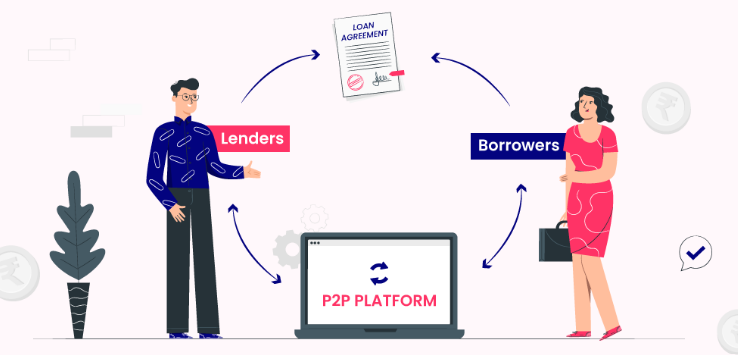
Peer-to-peer (P2P) lending platforms have emerged as disruptive forces in the financial landscape, promising to democratize lending and provide alternative sources of financing. However, not all P2P lending ventures have succeeded in realizing their lofty ambitions. A seminal study by Klein, Shtudiner, and Zwilling, published in Electronic Commerce Research in 2023, delves into the underlying factors contributing to the failures of P2P lending platforms. Let’s unravel the mysteries uncovered in their research.
The Promise of P2P Lending
At its inception, P2P lending captured the imagination of investors and borrowers alike, offering a decentralized model that bypasses traditional financial intermediaries. Through online platforms, individuals could lend directly to other individuals or small businesses, potentially earning higher returns than traditional savings accounts or bonds while providing borrowers with access to capital at competitive rates.
The Research Inquiry
Klein, Shtudiner, and Zwilling’s study seek to understand why certain P2P lending platforms falter despite their initial promise. By examining the misalignment between lenders’ preferences and platforms’ intentions, the researchers shed light on the fundamental disconnects that undermine the sustainability and viability of these ventures.
The Misalignment Dilemma
Central to Klein et al.’s findings is the revelation of a significant misalignment between the preferences of P2P lenders and the intentions of the platforms themselves. While lenders prioritize factors such as borrower risk assessment, transparency, and loan diversification, platforms often prioritize scalability, profitability, and borrower acquisition.
Trust Deficits and Information Asymmetry
One of the key challenges identified by the researchers is the presence of trust deficits and information asymmetry within P2P lending ecosystems. Lenders may lack confidence in the platforms’ risk assessment methodologies, loan underwriting processes, or borrower vetting procedures, leading to heightened perceptions of risk and reluctance to participate.
Regulatory Uncertainty
The regulatory landscape surrounding P2P lending is another critical factor contributing to platform failures. In many jurisdictions, P2P lending operates in a regulatory gray area, subject to evolving regulatory frameworks and compliance requirements. The lack of regulatory clarity not only undermines investor confidence but also exposes platforms to legal and operational risks.
Implications for Stakeholders
Klein, Shtudiner, and Zwilling’s research carries significant implications for various stakeholders within the P2P lending ecosystem. For platform operators, understanding and addressing the misalignment between lender preferences and platform objectives is paramount to fostering trust, attracting investment, and ensuring long-term sustainability. Lenders, meanwhile, must exercise due diligence and risk management practices to mitigate the inherent uncertainties associated with P2P lending.
Future Directions
Moving forward, the researchers advocate for greater transparency, accountability, and regulatory oversight within the P2P lending industry. Establishing standardized risk disclosure practices, enhancing borrower due diligence protocols, and fostering open communication channels between platforms and lenders are essential steps towards building a more resilient and trustworthy P2P lending ecosystem.
Conclusion
In conclusion, Klein, Shtudiner, and Zwilling’s study offers valuable insights into the intricacies of P2P lending platform failures. By illuminating the disconnects between lender preferences and platform intentions, the researchers provide a roadmap for addressing the root causes of failure and fostering greater trust, transparency, and sustainability within the P2P lending industry. As the sector continues to evolve, heedful attention to these insights can pave the way for a more resilient and inclusive financial ecosystem.


 SIMCEL ONLINE
Leave a Reply