
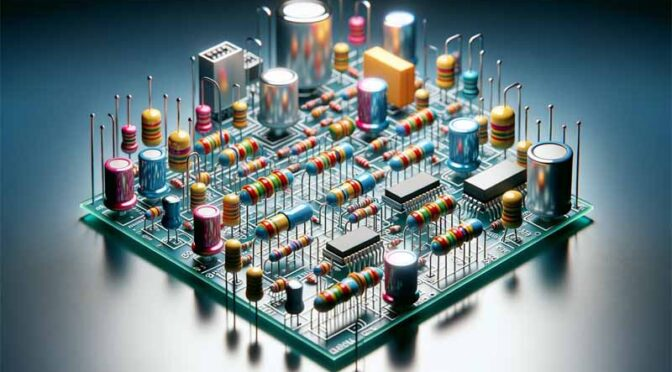
In the ever-evolving landscape of computing, analog computers have played a pivotal role in shaping the technological advancements we enjoy today. However, with the rise of digital computing, analog computers have taken a back seat in recent years. In this blog post, we will explore the future of analog computing, the limits it faces, why digital computing has taken the lead, and what defines an analog computing system.
What is the future of analog computing?
The future of analog computing holds promise, especially in niche applications where analog systems excel. While analog computing has largely given way to digital computing in mainstream use, it continues to have relevance in specific domains. Areas like signal processing, control systems, and real-time simulations can benefit from the inherent parallel processing capabilities of analog computers.
Furthermore, the development of hybrid systems that combine analog and digital components is an emerging trend. These hybrids can leverage the strengths of analog computing while benefiting from the precision and flexibility of digital technology.
What are the limits of analog computers?
Analog computers, while powerful in certain aspects, also have inherent limitations:
- Limited Precision: Analog computing deals with continuous values and is subject to limited precision. Digital computing, on the other hand, offers high precision due to its discrete representation of data.
- Complexity: Designing and maintaining analog computers for complex tasks can be challenging and expensive.
- Lack of Flexibility: Analog systems are generally designed for specific tasks and lack the versatility of digital systems, which can be reprogrammed for various applications.
- Data Storage: Analog computers struggle with data storage and recall, whereas digital systems excel in this regard.
Why digital computing prevail today over analog computing?
Digital computing has become the dominant paradigm for several compelling reasons:
- Precision: Digital computing offers a level of precision and accuracy that analog systems cannot match. This precision is essential in various fields like science, engineering, and data analysis.
- Versatility: Digital computers can be reprogrammed for a wide range of tasks, making them adaptable to changing requirements.
- Data Handling: Digital systems excel at data storage, retrieval, and manipulation, which is crucial in today’s data-driven world.
- Error Correction: Digital systems allow for robust error detection and correction mechanisms, ensuring data integrity.
- Miniaturization: The miniaturization of digital components has led to the development of portable and powerful devices that have become integral to our daily lives.
What is an analog computing system?
An analog computing system is a type of computer that processes information using continuous variables. Instead of manipulating discrete binary data like digital computers, analog computers use physical phenomena, such as electrical voltages, currents, or mechanical movements, to represent and solve problems. These systems are designed to model and solve differential equations, making them well-suited for real-time simulations and specific scientific and engineering tasks.
Analog computing systems utilize components like operational amplifiers, integrators, and analog multipliers to perform mathematical operations. Their unique ability to handle complex differential equations and parallel processing made them valuable tools in scientific research and engineering applications for many decades.
In conclusion, analog computing, while less prominent in the mainstream, continues to have a place in specialized fields and specific applications. The future of analog computing may involve hybrid systems that harness the strengths of both analog and digital technologies. The limits of analog computing, such as limited precision and complexity, have been key drivers behind the dominance of digital computing, which offers precision, versatility, and error correction mechanisms crucial in today’s technological landscape.


 SIMCEL ONLINE
Leave a Reply