
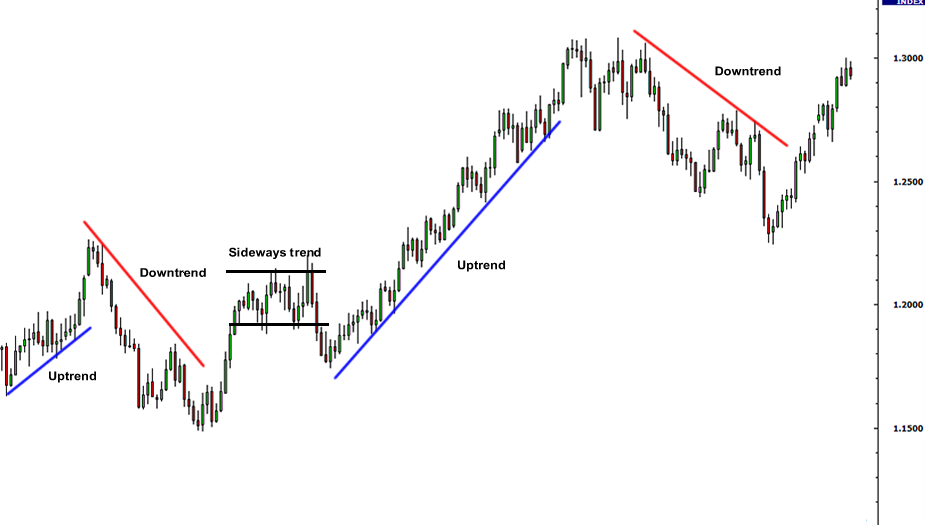
In the world of forex trading, chart patterns are like the roadmaps that guide traders through the complex terrain of the financial markets. They provide invaluable insights into potential price movements and offer opportunities for traders to make informed decisions. In this comprehensive guide, we’ll explore the art of chart patterns trading, empowering you to elevate your trading game.
Understanding Chart Patterns
Chart patterns are visual representations of historical price movements on a trading chart. They can signal the potential direction of future price movements based on the idea that history tends to repeat itself. There are two primary categories of chart patterns: reversal patterns and continuation patterns.
Reversal Patterns: These patterns suggest a potential change in the current trend. Common reversal patterns include Head and Shoulders, Double Tops and Bottoms, and the Shooting Star.
Continuation Patterns: These patterns indicate that the prevailing trend is likely to continue after a consolidation or brief pause. Examples of continuation patterns include Flags, Pennants, and Triangles.
The Power of Chart Patterns
- Entry and Exit Points: Chart patterns can serve as clear signals for entry and exit points in the market. For example, a Bullish Engulfing pattern near a support level may be a strong signal to enter a long position.
- Risk Management: Chart patterns also play a crucial role in risk management. Setting stop-loss levels based on the pattern’s structure can help traders limit potential losses.
- Confirmation: Combining chart patterns with other technical indicators or fundamental analysis can enhance their reliability. Confirmation from multiple sources can strengthen the validity of a trading signal.
Chart Patterns Trading Strategies
Here are some popular chart patterns and strategies for trading them:
- Double Tops and Bottoms: These reversal patterns often indicate a trend reversal. Traders look for confirmation of the pattern’s completion and then enter trades in the direction of the expected reversal.
- Head and Shoulders: This is another reversal pattern with a bearish or bullish bias, depending on whether it’s an inverse Head and Shoulders or a regular Head and Shoulders. Traders typically enter after the pattern is confirmed.
- Flags and Pennants: These are continuation patterns that indicate a brief consolidation before the trend resumes. Traders may enter trades once the price breaks out of the flag or pennant formation.
- Triangles: Triangles, whether ascending, descending, or symmetrical, represent a period of consolidation. Traders often enter trades when the price breaks out of the triangle, indicating the potential direction of the trend.
Conclusion
Chart pattern trading is both an art and a science. While recognizing patterns is a valuable skill, successful trading involves more than just pattern recognition. It requires sound risk management, discipline, and a comprehensive trading plan. Moreover, understanding the broader market context, combining patterns with other technical or fundamental analyses, and continuous learning is key to becoming a proficient chart patterns trader.
Remember that no trading strategy, including chart patterns trading, guarantees success, and losses are a part of trading. Therefore, always trade with money you can afford to lose and continuously refine your skills to adapt to the ever-changing landscape of the forex market. With practice, patience, and dedication, chart patterns trading can become a powerful tool in your trading arsenal.


 SIMCEL ONLINE
Leave a Reply