
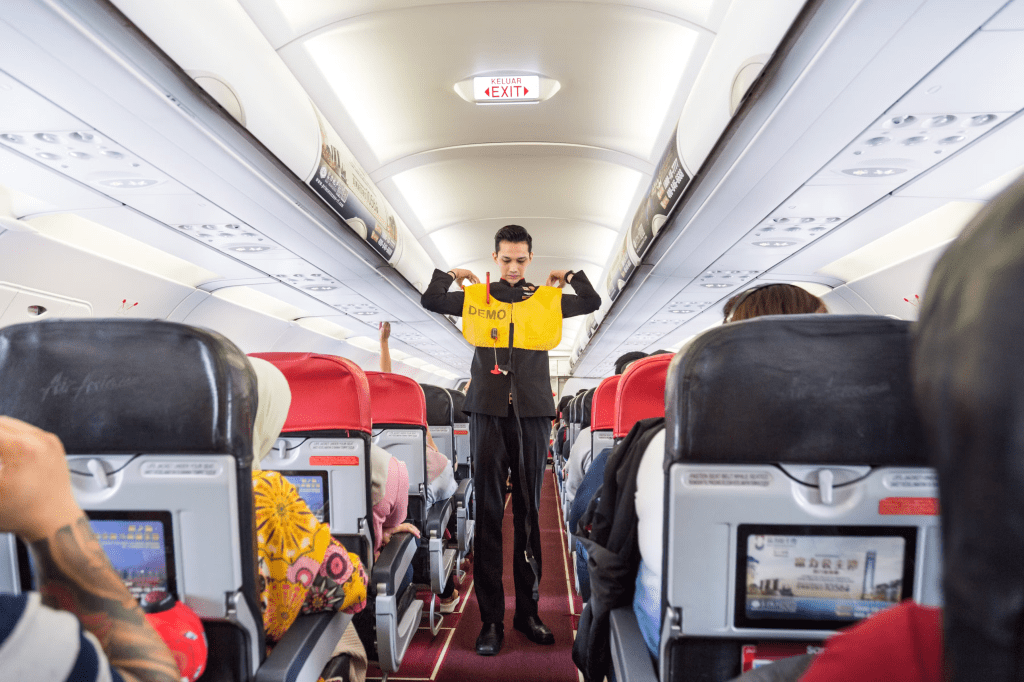
The safety demonstration at the beginning of a flight is a crucial part of air travel. It provides passengers with vital information on how to stay safe in case of an emergency. However, it’s no secret that many passengers tend to tune out during these demonstrations. In this blog post, we’ll explore effective strategies for ensuring that passengers pay attention and absorb the safety information, enhancing overall flight safety.
- Engaging Presentation:
The safety demo doesn’t have to be a dry, monotonous routine. Airlines can employ charismatic flight attendants or actors to deliver safety instructions with enthusiasm and a touch of humor. A captivating presentation can pique passengers’ interest and make them more likely to pay attention.
- Visual Aids:
Incorporate visual aids into the safety demonstration. Modern aircraft often feature seatback screens, which can display animated safety videos. These visuals can be more engaging and easier to follow than a verbal explanation alone.
- Interactive Elements:
Include interactive elements that encourage passenger participation. For example, some airlines use call-and-response techniques or quizzes to keep passengers engaged. This not only holds their attention but also tests their comprehension of the safety instructions.
- Storytelling:
Frame the safety demonstration as a storytelling experience. Narrate a hypothetical scenario where passengers might need to use safety equipment or follow evacuation procedures. This approach can make the information more relatable and memorable.
- Utilize Technology:
Leverage passengers’ digital devices. Airlines can provide a QR code in the seat pocket that links to a mobile-friendly safety video or presentation. Passengers can follow along on their own screens, ensuring they don’t miss crucial information.
- Incorporate Visual Cues:
Highlight the location of safety equipment, such as life vests and oxygen masks, with clear, visual cues. Use illuminated signs, markings, or illustrations to make it easier for passengers to locate these items in an emergency.
- Involve Cabin Crew:
Empower cabin crew to interact with passengers during the demonstration. Flight attendants can make eye contact, ask if passengers have any questions, and provide assistance as needed. Personalized engagement can make passengers feel more accountable for their own safety.
- Repetition:
Consider providing safety reminders throughout the flight. Flight attendants can use the in-flight announcements to recap essential safety information or highlight specific procedures related to the journey.
- Make It Accessible:
Ensure that safety information is accessible to all passengers, including those with disabilities. Provide materials in multiple formats (e.g., braille, large print) and have crew members available to assist passengers with specific needs.
- Prioritize Passenger Comfort:
Schedule the safety demonstration at a time when passengers are most likely to be attentive, such as after takeoff but before reaching cruising altitude. Avoid conducting the demo during meal service or other distracting activities.
Conclusion:
Getting passengers to listen to the safety demonstration is not just a matter of compliance; it’s about ensuring their safety in the air. Airlines have a responsibility to present this information in a way that captures passengers’ attention and leaves a lasting impression. By employing engaging presentations, visuals, interactivity, and a bit of creativity, airlines can make safety demonstrations an integral part of the passenger experience, contributing to overall flight safety and passenger confidence in air travel.


 SIMCEL ONLINE
Leave a Reply