
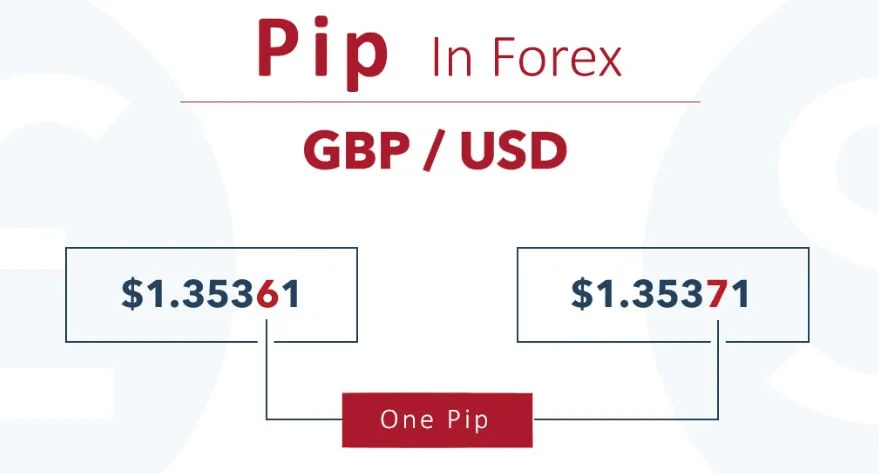
If you are new to the world of trading, you may have come across the term “pip” and wondered what it actually means. Pips are a crucial concept in financial trading, representing the smallest unit of price movement in a currency pair.
In this blog post, we will explore the significance of 1 pip and its implications in trading.
Defining 1 Pip
In trading, 1 pip refers to a one-unit movement in the fourth decimal place for most currency pairs. However, it’s important to note that certain currency pairs, such as the Japanese yen (JPY), are an exception and are measured in the second decimal place. The value of 1 pip is determined by the exchange rate and can vary between currency pairs.
For example, let’s consider the EUR/USD currency pair. If the exchange rate moves from 1.2500 to 1.2501, it has increased by 1 pip. Similarly, if the exchange rate moves from 1.2500 to 1.2499, it has decreased by 1 pip.
Significance of 1 Pip in Trading
Understanding the significance of 1 pip is crucial for calculating profits and losses, managing risk, and determining position sizes in trading. Here are a few key points to consider:
- Profit and Loss Calculation: The change in the number of pips determines the profit or loss of a trade. For example, if you buy a currency pair and the price moves in your favor by 10 pips, you would have gained 10 times the value of 1 pip. Conversely, if the price moves against your position by 10 pips, you would have incurred a loss of 10 times the value of 1 pip.
- Position Sizing: Pips are also essential for determining the appropriate position size in a trade. Traders often use a risk management technique called “position sizing” to allocate the right amount of capital to each trade based on their risk tolerance. By understanding the value of 1 pip, traders can adjust their position sizes to control risk effectively.
- Pip Value: The monetary value of 1 pip depends on the lot size (volume of the trade) and the currency pair being traded. Different currency pairs have different pip values due to variations in their exchange rates. Most trading platforms provide calculators or indicators that automatically calculate the pip value based on the lot size and currency pair.
- Leverage and Pip Impact: Leverage allows traders to control larger positions with smaller amounts of capital. However, it also amplifies the potential gains or losses. The impact of 1 pip movement is magnified when leverage is applied. Higher leverage increases the potential profitability of trades but also increases the risk.
Conclusion
In summary, 1 pip represents the smallest unit of price movement in trading. It plays a crucial role in calculating profits and losses, managing risk, determining position sizes, and understanding the monetary impact of each trade. By comprehending the significance of 1 pip, traders can make informed decisions, control risk effectively, and refine their trading strategies.
Remember, practicing with demo accounts and gaining real-time trading experience will help you become more comfortable with the concept of pips and their impact on your trades. Continually educate yourself, analyze market movements, and refine your strategies to navigate the dynamic world of trading successfully.


 SIMCEL ONLINE
Leave a Reply