
In today’s interconnected global economy, the foreign exchange market, or Forex, plays a crucial role in facilitating international trade and investment. The Forex market is the largest and most liquid financial market globally, with trillions of dollars traded daily. One of the key aspects of Forex trading is understanding the major currency pairs, which serve as the backbone of this dynamic marketplace.
In this blog post, we will explore the major currency pairs, their significance, and how they shape the Forex market.
What Are Currency Pairs?
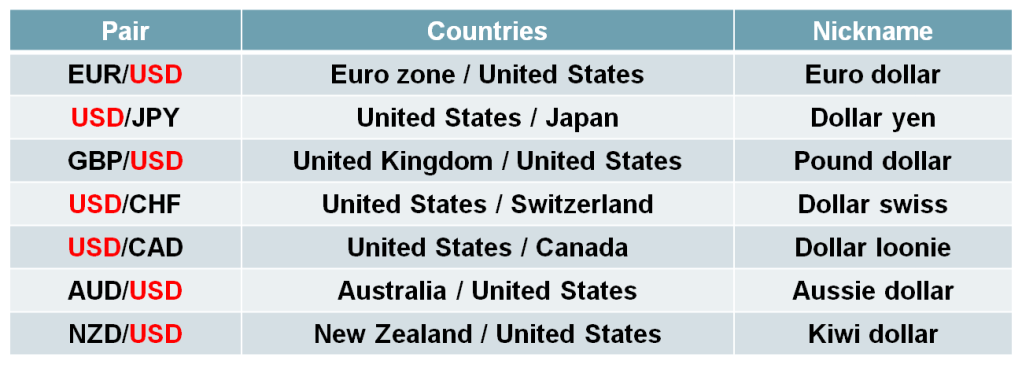
Currency pairs are the quotation of one currency against another in the Forex market. They represent the relative value and exchange rate between two currencies. Currency pairs are divided into three categories: major pairs, minor pairs, and exotic pairs. The major currency pairs account for the majority of trading volume and are considered the most heavily traded pairs.
The Major Currency Pairs:
- EUR/USD (Euro/US Dollar): The EUR/USD pair is the most actively traded and highly liquid currency pair globally. It represents the exchange rate between the Eurozone’s common currency, the Euro, and the United States Dollar. As the two largest economies in the world, any economic or political developments in the European Union or the United States can have a significant impact on this pair.
- USD/JPY (US Dollar/Japanese Yen): The USD/JPY pair represents the exchange rate between the US Dollar and the Japanese Yen. Japan is known for its strong manufacturing and technological prowess, while the United States is the largest economy globally. This pair is particularly sensitive to economic indicators, geopolitical events, and monetary policies of both countries.
- GBP/USD (British Pound/US Dollar): The GBP/USD pair, also known as the “Cable,” reflects the exchange rate between the British Pound and the US Dollar. The United Kingdom has a strong financial sector and close ties with the United States. Factors such as Brexit negotiations, economic indicators, and political developments impact this pair significantly.
- USD/CHF (US Dollar/Swiss Franc): The USD/CHF pair represents the exchange rate between the US Dollar and the Swiss Franc. Switzerland is renowned for its stable economy and the Swiss Franc’s safe-haven status. This pair is influenced by global risk sentiment, economic data, and central bank policies.
- USD/CAD (US Dollar/Canadian Dollar): The USD/CAD pair reflects the exchange rate between the US Dollar and the Canadian Dollar. Canada is a major exporter of commodities, particularly oil. Consequently, fluctuations in oil prices, economic indicators, and trade relations between the two countries impact this pair significantly.
Significance of Major Currency Pairs:
Understanding and analyzing major currency pairs is crucial for Forex traders due to their liquidity, volatility, and impact on the overall market. Major pairs often exhibit tighter spreads, making them more cost-effective to trade. Moreover, they offer better liquidity, ensuring that traders can enter and exit positions with ease.
The major currency pairs are influenced by a multitude of factors, including economic indicators (such as GDP, employment data, and inflation), geopolitical events, central bank decisions, and market sentiment. Traders closely monitor these factors to identify potential trading opportunities and manage risk effectively.
Conclusion:
Mastering the major currency pairs is essential for any Forex trader aiming to navigate the dynamic and fast-paced world of currency trading. These pairs serve as the foundation of the Forex market, and understanding their dynamics can help traders make informed decisions and capitalize on market movements.
While the major currency pairs we discussed are the most heavily traded, it’s worth noting that the Forex market offers numerous other currency pairs for those seeking additional opportunities. As with any financial market, thorough research, risk management, and continuous learning are key to success in Forex trading.


 SIMCEL ONLINE
Leave a Reply