
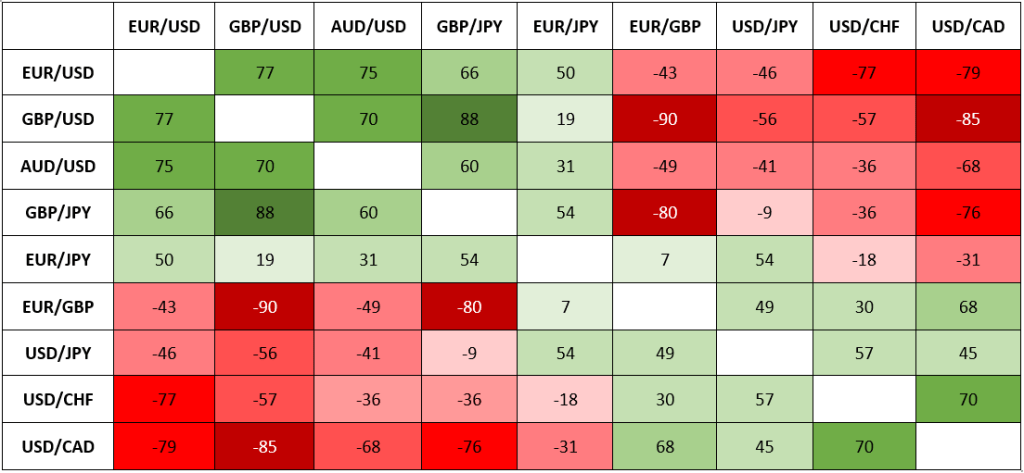
Currency correlations refer to the relationship between two or more currency pairs and how they move in relation to each other. These correlations can impact Forex trading in several ways:
- Risk management: Understanding currency correlations is essential for risk management. If a trader has multiple positions open in highly correlated currency pairs, it increases the risk of losses if the market moves against them. Therefore, traders should diversify their portfolios by selecting currency pairs that are not highly correlated.
- Hedging: Currency correlations can also be used for hedging. For example, if a trader has a long position in a currency pair that is negatively correlated with another currency pair, they can take a short position in the other currency pair to hedge their risk.
- Trading strategies: Currency correlations can also be used to develop trading strategies. For example, if a trader notices a strong positive correlation between two currency pairs, they can use this information to make informed trading decisions. If one currency pair shows signs of a bullish trend, the trader can consider taking a long position in the other currency pair.
- Market analysis: Currency correlations can also provide valuable insights into the overall market sentiment. If two currency pairs that are usually positively correlated suddenly start moving in opposite directions, it could signal a change in the market sentiment. Traders can use this information to adjust their trading strategies accordingly.
In conclusion, understanding currency correlations is essential for successful Forex trading. Traders should be aware of the correlations between different currency pairs and use this information to manage their risks, develop trading strategies, and analyze market sentiment. By doing so, they can increase their chances of success in the Forex market.


 SIMCEL ONLINE
Leave a Reply